Posts

Showing posts with the label Science

Scientists Examine the Power of Prayer

Well this is interesting.  A new paper in a forthcoming issue of the Journal of Experimental Social Psychology presents evidence that prayer can increase a person's ability to resists temptation--and offers a non-supernatural explanation for the phenomenon: The authors made use of two experimental paradigms to test the efficacy of prayer in preventing cognitive depletion. The first, called an emotion-suppression task, simply asked participants to watch a funny video but stifle all emotional responses, verbal and non-verbal, to the content. This requires a good amount of cognitive energy to pull off successfully. The second, called a stroop task, asked participants to indicate the ink color of various words flashed to them on a computer screen. The trick is that the words spell the names of various colors that are either consistent or inconsistent with the ink they are to identify. Check it out here . You’ll find that the inconsistent word/ink items are harder to respond to than...

Climate Change: New Evidence for the Hockey Stick

Image
The so-called "hockey stick" chart--which shows a rapid rise in global temperature is a mainstay in arguments that humans are causing climate change--a center of attacks by climate change denialists. A new study offers a revised chart that conforms the hockey stick chart. Climat Feedback explains the development: The contentious ‘hockey stick’ climate change graph has again been upheld as broadly accurate, doubtless to the rage of climate denialists/sceptics/whatevers. A team led by Michael Mann of Penn State University has looked at a whole range of proxies for surface temperatures over the last 2,000 years in an attempt to counter criticism of the graph, which showed a long ‘handle’ and a sharp upturn (the blade). Their findings? As the Christian Science Monitor puts it: “It still looks a lot like the much-battered, but still rink-ready stick of 1998. Today the handle reaches further back and it’s a bit more gnarly. But the blade at the business end tells the same story. ”...

Genetic Diversity in Europe

Image
Well. I am back from a tough month at work followed by a week's vacation. In searching the web today, I found Ed Young's fascinating account about how European genes mirror European geography: Within a drop of blood, you can find all the information you need to reasonably guess where a person came from, without ever having to look at their face, name or passport. Small variations in our DNA are enough for the task. They can be used to pinpoint someone's place of origin to a remarkable degree of accuracy, often to within a few hundred kilometres. The new discovery comes from a team of Swiss and American researchers led by John Novembre at UCLA, who wanted to understand how the human genome varies on a continental scale. To that end, they looked at the genomes of over 1.300 people sampled from almost three dozen countries across Europe. The sample was originally collected by GlaxoSmithKline to hunt out genetic variations that influence the effectiveness of drugs and their s...

Its the Creation Stupid

Nick Reeves, executive director of the Chartered Institution of Water and Environmental Management, has this post on the Guardian' s "Comment is Free" blog that argues that religious leaders need to take an interest in environmental issus: Profiling the award-winning environmental campaign work of Archbishop Bartholomew of Constantinople, spiritual leader of 300 million Orthodox Christians, Riazat Butt asks if religion can help prevent eco-catastrophe ( The pope of hope , June 18). After all, as the archbishop told Butt: "Religious people were indifferent, or even hostile, to science. Scientists and ecologists could see little relationship between their world and the world of faith." At a global environment conference in London last year, my professional institution, the Chartered Institution of Water and Environmental Management, brought together representatives of all the major faiths. There was one matter on which they all agreed: the need to collaborate for ...

Europe's Ancestors: Cro-Magnon 28,000 Years Old Had DNA Like Modern Humans

A very interesting report on some DNa analysis done on a 28,000 Cro-Magnon man skelton: Some 40,000 years ago, Cro-Magnons -- the first people who had a skeleton that looked anatomically modern -- entered Europe, coming from Africa. A group of geneticists, coordinated by Guido Barbujani and David Caramelli of the Universities of Ferrara and Florence, shows that a Cro-Magnoid individual who lived in Southern Italy 28,000 years ago was a modern European, genetically as well as anatomically. The Cro-Magnoid people long coexisted in Europe with other humans, the Neandertals, whose anatomy and DNA were clearly different from ours. However, obtaining a reliable sequence of Cro-Magnoid DNA was technically challenging. "The risk in the study of ancient individuals is to attribute to the fossil specimen the DNA left there by archaeologists or biologists who manipulated it," Barbujani says. "To avoid that, we followed all phases of the retrieval of the fossil bones and typed the D...

Let's Get Rid of Darwinism

No, I am not changing my views on evolution. The title of this post is a wonderful column by Olivia Judson about why we need to stop using the term "Darwinism": Darwin did more in one lifetime than most of us could hope to accomplish in two. But his giantism has had an odd and problematic consequence. It’s a tendency for everyone to refer back to him. “Why Darwin was wrong about X”; “Was Darwin wrong about Y?”; “What Darwin didn’t know about Z” — these are common headlines in newspapers and magazines, in both the biological and the general literature. Then there are the words: Darwinism (sometimes used with the prefix “neo”), Darwinist (ditto), Darwinian. Why is this a problem? Because it’s all grossly misleading. It suggests that Darwin was the beginning and the end, the alpha and omega, of evolutionary biology, and that the subject hasn’t changed much in the 149 years since the publication of the “Origin.” He wasn’t, and it has. Although several of his ideas — natural and ...

The Persistence of Diet

Image
Here is an interesting item for your weekend. Turns out that a group of scientists decided to study the persistence of food chosen by several cultures. It turns out that a particular culture's food choices seem to persist for hundreds of years. (Bad news for the English?): The research, 'The non-equilibrium nature of culinary evolution', shows that three national cuisines - British, French and Brazilian -- are affected by the founder effect which keeps idiosyncratic and nutritionally ambivalent, expensive and sometimes hard to transport ingredients in our diets. Using the medieval cookery book, Pleyn Delit, and three authoritative cook books from Britain, France and Brazil, the New Penguin Cookery Book, Larousse Gastronomique and Dona Benta respectively, the researchers from the University of Sao Paulo, Brazil, compiled statistics which could be compared to see how time and distance effect the three different national cuisines. . . . Ranking the importance of certain food t...

Genetics and Human Migration

Scientific American has a terrific article about the use of genetics to trace human migration patters across the globe: Almost all our DNA—99.9 percent of the three billion “letters,” or nucleotides, that make up the human genome—is the same from person to person. But interwoven in that last 0.1 percent are telltale differences. A comparison among, say, East Africans and Native Americans can yield vital clues to human ancestry and to the inexorable progression of colonizations from continent to continent. Until recent years, DNA passed down only from fathers to sons or from mothers to their children has served as the equivalent of fossilized footprints for geneticists. The newest research lets scientists adjust their focus, widening the field of view beyond a few isolated stretches of DNA to inspect hundreds of thousands of nucleotides scattered throughout the whole genome. . . . The fast, relatively predictable rate of “neutral” mitochondrial mutations—ones that are neither benefic...

Evidence of Macro-evolution

Image
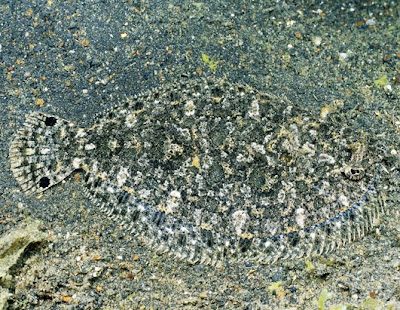
Critics of evolution often argue (falsely) that there is no evidence of marco-evolution (i.e., evolution of one species into another). They also like to point to flatfish (like sole, plaice, turbot, flounder and halibut) and argue that there is no fossil evidence that explains how flatfish ended up with both eyes on one side of their face. In the latest edition of Nature , however, a University of Chicago graduate student describes evidence of the evolution of flatfish that he found in museum archives: Scientists have until now largely assumed the asymmetrical, one-sided eye arrangement was a trait that must have arisen suddenly in flatfish because they could not see a benefit for the fish if it took millions of years for an eye to migrate from one side to the other. Even Charles Darwin had trouble answering critics who used flatfish and their strange eyes as an argument against his evolutionary theory after he published it in 1859. Fossils of two long-extinct flatfish species found i...

God As What Emerges From Complexity

Scientific American reviews Reinventing the Sacred (Basic Books, 2008) a new book by Stuart Kauffman, that argues that God is what emerges from complexity: French mathematician Pierre-Simon Laplace was able to “imagine an Intelligence who would know at a given instant of time all forces acting in nature and the position of all things of which the world consists.... Then it could derive a result that would embrace in one and the same formula the motion of the largest bodies in the universe and of the lightest atoms. Nothing would be uncertain for this Intelligence.” By the early 20th century science undertook to become Laplace’s demon. It cast a wide “causal net” linking effects to causes throughout the past and into the future and sought to explain all complex phenomena by reducing them into their simpler component parts. Nobel laureate physicist Steven Weinberg captured this philosophy of reductionism poignantly: “All the explanatory arrows point downward, from societies to people, t...

New Scientific Evidence on Origins of Sexual Orientation

Image
Two new studies provide new evidence of the biological origins of sexual orientation,. The first study examined brian differences relevant to sexual orientation: Researchers using brain scans have found new evidence that biology—and not environment—is at the core of sexual orientation. Scientists at the Stockholm Brain Institute in Sweden report in the Proceedings of the National Academy of Sciences USA that gay men and straight women share similar traits—most notably in the size of their brains and the activity of the amygdala—an area of the brain tied to emotion, anxiety and aggression. The same is true for heterosexual men and lesbians. Study author, neurologist Ivanka Savic–Berglund , says such characteristics would develop in the womb or in early infancy, meaning that psychological or environmental factors played little or no role. "This is yet another in a long series of observations showing there's a biological reason for sexual orientation," says Dean Hamer , a m...

Faith and Alien Life

Image
The Rev. John Mather, the priest at one of the new "church plants" in the Arizona Diocese, pointed me to this very interesting article in Wired about the religious implicatins of a discovery of alien life: Little green men might shock the secular public. But the Catholic Church would welcome them as brothers. That's what Vatican chief astronomer and papal science adviser Gabriel Funes explained in a recent article in L'Osservatore Romano , the newsletter of the Vatican Observatory ( translated here ). His conclusion might surprise nonbelievers. After all, isn't this the same church that imprisoned Galileo for saying that the Earth revolves around the sun? Doesn't the Bible say that God created man -- not little green men -- in his image? Indeed, many observers assert that aliens would be bad for believers. Jill Tarter , director of the Center for SETI Research, once wrote that finding intelligent other-worldly life "will be inconsistent with the existenc...

Strengths and Weakness and Evolution

Last week, I posted about the new strategy in teaching creationism in the schools--by importing it as part of a theory that both the strengths and weaknesses of evolution should be taught. The Houston Chronicle has an excellent editorial about the dangers of this approach: The focus of attention in this, the first overhaul of the science curriculum in over a decade, is not on the teaching of creationism, which has been rebuffed by several courts. It is on whether the curriculum will continue to include teaching on the "strengths and weaknesses" of scientific theories, including evolution. It sounds reasonable. Who's against fair and balanced? But critics are alarmed that this is the latest chapter in what has become a national strategy of evolution's foes — a "teach the controversy" approach, whereby religion is propounded under the guise of scientific inquiry. Given the recent comments of both the chairman and the vice chairman of the board, there is ampl...

A New Anti-Evolution Strategy

The New York Times had an interesting article on the latest strategy by opponents of evolution to bring religion into the science classroom: Opponents of teaching evolution, in a natural selection of sorts, have gradually shed those strategies that have not survived the courts. Over the last decade, creationism has given rise to “creation science,” which became “intelligent design,” which in 2005 was banned from the public school curriculum in Pennsylvania by a federal judge. Now a battle looms in Texas over science textbooks that teach evolution, and the wrestle for control seizes on three words. None of them are “creationism” or “intelligent design” or even “creator.” The words are “strengths and weaknesses.” Starting this summer, the state education board will determine the curriculum for the next decade and decide whether the “strengths and weaknesses” of evolution should be taught. The benign-sounding phrase, some argue, is a reasonable effort at balance. But critics say it is a ...

What is Creationsim?

Image
A large number of Americans claim to believe in "creationism" and "Intelligent Design." While I often get concerned about these numbers, I also wonder whether part of the problem is the use of these terms. After all, as should be clear by my many posts on evolution , I believe in a creating God who was an "intelligent designer", but I also fully accept the science of evolution, have come to believe that evolution is the means by which God created, and reject Intelligent Design. Does this make me a creationist? Could this sense of the word "creationism" be part of the problem? John Pieret has a post that does a very good exploring this issue: Broadly speaking, a "creationist" could be said to include anyone who believes that god(s) are somehow responsible for the existence and nature of the world. Theodosius Dobzhansky, one of the greatest evolutionary biologists of the 20th century, is famous for the phrase "nothing in biology make...

Faith and Science

The American Association for the Advancement of Science recently released this very interesting video, which features Dr. Francis Collins and AAAS CEO Alan Leshner discussing the compatibility of science and religion, including a focus on evolution. Some in the atheosphere are critical of the AAAS for even dealing with this issue. I think that they miss the point--they are not the audiuence. The AAAS is all about "advancing" science and taking on this issue is essential when a large percentage of Americans seem to think that science is incompatable with their faith.

The Direction of Time

Sean Carroll, a senior research associate in physics at the California Institute of Technology, has a wonderfully rich and accessible article in the Scientific American that attempts to address a real puzzle: why does time seem to only move in one direction. Here are some excerpts: Among the unnatural aspects of the universe, one stands out: time asymmetry. The microscopic laws of physics that underlie the behavior of the universe do not distinguish between past and future, yet the early universe—hot, dense, homogeneous—is completely different from today’s—cool, dilute, lumpy. The universe started off orderly and has been getting increasingly disorderly ever since. The asymmetry of time, the arrow that points from past to future, plays an unmistakable role in our everyday lives: it accounts for why we cannot turn an omelet into an egg, why ice cubes never spontaneously unmelt in a glass of water, and why we remember the past but not the future. And the origin of the asymmetry we exp...

Our Reasonable Faith

RJS, a scientist and a Christian, has had a very good series on faith and reason at Jesus Creed . It is following Tim Keller's new book, The Reason for God . I thought that the latest essay was worth noting: We are wrong to believe that we will ever construct an irrefutable argument or proof for the existence of or the nature of God. This is an impossible task. Rather we will look at preponderance of evidence and the viability of a Christian world view, taking into account all of the evidence we have available. Even in science we have no absolute proof – only empirically based theories that organize and explain the evidence better than anything else available. A theory is accepted if it explains and predicts — a theory is refined and improved, sometimes substantially, sometimes incrementally, in the light of new evidence, observation, and information. Keller says: If the God of the Bible exists, he is not a man in the attic, but the Playwright. That means we won’t be able to find...

New Evidence on Human Migration

Most of the genetic work exploring the migration of humans out of Africa and thoughout the world rely on a amall set of genes. A group of Oxford scientists have announced a new statistical method that takes account of the entire genome, and the new methodology is already disclosing some interesting findings: Scientists from the University of Oxford and University College Cork have developed a technique that analyses shared parts of chromosomes across the entire human genome. It can give much finer detail than other methods and makes it possible to delve further back in time and identify smaller genetic contributions. Application of the method has already turned up such surprising findings as a strong Mongolian contribution to the genes of the Native American Pima people and gene flow from the north of Europe to Eastern Siberia. Previous methods of genome analysis have either concentrated on one part of the human genome -- for example, just the Y-chromosome -- or are based on "bean...

United Methodists and Teachers on Evolution in the Classroom

Image
Two unrelated stories worth noting. First, the United Methodist Church has adopted a resolution rejecting the teaching of creationism and "Intelligent Design" as science: The United Methodist Church passed a resolution at its recent General Conference opposing the teaching of Creation Science and Intelligent Design in public schools. The statement, passed during a 10-day conference in Fort Worth, Texas, that ended May 2, put the denomination on record "as opposing the introduction of any faith-based theories such as Creationism or Intelligent Design into the science curriculum of our public schools." "Creationism and Intelligent Design are appropriate topics in public education classes such as comparative religion, literature, or philosophy since scientific method incorporates critical thinking processes," said the resolution adopted by a vote of 508 to 323. "All truth is God’s truth. The promotion of religion or any particular religion in the publi...