Posts

Showing posts with the label Evolution

Genetic Diversity in Europe

Image
Well. I am back from a tough month at work followed by a week's vacation. In searching the web today, I found Ed Young's fascinating account about how European genes mirror European geography: Within a drop of blood, you can find all the information you need to reasonably guess where a person came from, without ever having to look at their face, name or passport. Small variations in our DNA are enough for the task. They can be used to pinpoint someone's place of origin to a remarkable degree of accuracy, often to within a few hundred kilometres. The new discovery comes from a team of Swiss and American researchers led by John Novembre at UCLA, who wanted to understand how the human genome varies on a continental scale. To that end, they looked at the genomes of over 1.300 people sampled from almost three dozen countries across Europe. The sample was originally collected by GlaxoSmithKline to hunt out genetic variations that influence the effectiveness of drugs and their s...
Europe's Ancestors: Cro-Magnon 28,000 Years Old Had DNA Like Modern Humans

A very interesting report on some DNa analysis done on a 28,000 Cro-Magnon man skelton: Some 40,000 years ago, Cro-Magnons -- the first people who had a skeleton that looked anatomically modern -- entered Europe, coming from Africa. A group of geneticists, coordinated by Guido Barbujani and David Caramelli of the Universities of Ferrara and Florence, shows that a Cro-Magnoid individual who lived in Southern Italy 28,000 years ago was a modern European, genetically as well as anatomically. The Cro-Magnoid people long coexisted in Europe with other humans, the Neandertals, whose anatomy and DNA were clearly different from ours. However, obtaining a reliable sequence of Cro-Magnoid DNA was technically challenging. "The risk in the study of ancient individuals is to attribute to the fossil specimen the DNA left there by archaeologists or biologists who manipulated it," Barbujani says. "To avoid that, we followed all phases of the retrieval of the fossil bones and typed the D...

Let's Get Rid of Darwinism

No, I am not changing my views on evolution. The title of this post is a wonderful column by Olivia Judson about why we need to stop using the term "Darwinism": Darwin did more in one lifetime than most of us could hope to accomplish in two. But his giantism has had an odd and problematic consequence. It’s a tendency for everyone to refer back to him. “Why Darwin was wrong about X”; “Was Darwin wrong about Y?”; “What Darwin didn’t know about Z” — these are common headlines in newspapers and magazines, in both the biological and the general literature. Then there are the words: Darwinism (sometimes used with the prefix “neo”), Darwinist (ditto), Darwinian. Why is this a problem? Because it’s all grossly misleading. It suggests that Darwin was the beginning and the end, the alpha and omega, of evolutionary biology, and that the subject hasn’t changed much in the 149 years since the publication of the “Origin.” He wasn’t, and it has. Although several of his ideas — natural and ...

Genetics and Human Migration

Scientific American has a terrific article about the use of genetics to trace human migration patters across the globe: Almost all our DNA—99.9 percent of the three billion “letters,” or nucleotides, that make up the human genome—is the same from person to person. But interwoven in that last 0.1 percent are telltale differences. A comparison among, say, East Africans and Native Americans can yield vital clues to human ancestry and to the inexorable progression of colonizations from continent to continent. Until recent years, DNA passed down only from fathers to sons or from mothers to their children has served as the equivalent of fossilized footprints for geneticists. The newest research lets scientists adjust their focus, widening the field of view beyond a few isolated stretches of DNA to inspect hundreds of thousands of nucleotides scattered throughout the whole genome. . . . The fast, relatively predictable rate of “neutral” mitochondrial mutations—ones that are neither benefic...

Evidence of Macro-evolution

Image
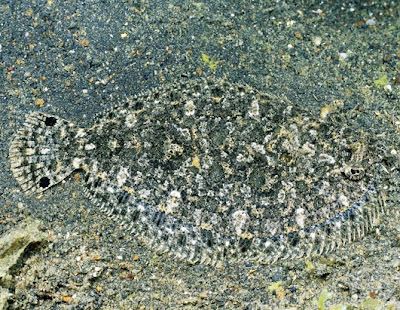
Critics of evolution often argue (falsely) that there is no evidence of marco-evolution (i.e., evolution of one species into another). They also like to point to flatfish (like sole, plaice, turbot, flounder and halibut) and argue that there is no fossil evidence that explains how flatfish ended up with both eyes on one side of their face. In the latest edition of Nature , however, a University of Chicago graduate student describes evidence of the evolution of flatfish that he found in museum archives: Scientists have until now largely assumed the asymmetrical, one-sided eye arrangement was a trait that must have arisen suddenly in flatfish because they could not see a benefit for the fish if it took millions of years for an eye to migrate from one side to the other. Even Charles Darwin had trouble answering critics who used flatfish and their strange eyes as an argument against his evolutionary theory after he published it in 1859. Fossils of two long-extinct flatfish species found i...

Strengths and Weakness and Evolution

Last week, I posted about the new strategy in teaching creationism in the schools--by importing it as part of a theory that both the strengths and weaknesses of evolution should be taught. The Houston Chronicle has an excellent editorial about the dangers of this approach: The focus of attention in this, the first overhaul of the science curriculum in over a decade, is not on the teaching of creationism, which has been rebuffed by several courts. It is on whether the curriculum will continue to include teaching on the "strengths and weaknesses" of scientific theories, including evolution. It sounds reasonable. Who's against fair and balanced? But critics are alarmed that this is the latest chapter in what has become a national strategy of evolution's foes — a "teach the controversy" approach, whereby religion is propounded under the guise of scientific inquiry. Given the recent comments of both the chairman and the vice chairman of the board, there is ampl...

A New Anti-Evolution Strategy

The New York Times had an interesting article on the latest strategy by opponents of evolution to bring religion into the science classroom: Opponents of teaching evolution, in a natural selection of sorts, have gradually shed those strategies that have not survived the courts. Over the last decade, creationism has given rise to “creation science,” which became “intelligent design,” which in 2005 was banned from the public school curriculum in Pennsylvania by a federal judge. Now a battle looms in Texas over science textbooks that teach evolution, and the wrestle for control seizes on three words. None of them are “creationism” or “intelligent design” or even “creator.” The words are “strengths and weaknesses.” Starting this summer, the state education board will determine the curriculum for the next decade and decide whether the “strengths and weaknesses” of evolution should be taught. The benign-sounding phrase, some argue, is a reasonable effort at balance. But critics say it is a ...

What is Creationsim?

Image
A large number of Americans claim to believe in "creationism" and "Intelligent Design." While I often get concerned about these numbers, I also wonder whether part of the problem is the use of these terms. After all, as should be clear by my many posts on evolution , I believe in a creating God who was an "intelligent designer", but I also fully accept the science of evolution, have come to believe that evolution is the means by which God created, and reject Intelligent Design. Does this make me a creationist? Could this sense of the word "creationism" be part of the problem? John Pieret has a post that does a very good exploring this issue: Broadly speaking, a "creationist" could be said to include anyone who believes that god(s) are somehow responsible for the existence and nature of the world. Theodosius Dobzhansky, one of the greatest evolutionary biologists of the 20th century, is famous for the phrase "nothing in biology make...

Faith and Science

The American Association for the Advancement of Science recently released this very interesting video, which features Dr. Francis Collins and AAAS CEO Alan Leshner discussing the compatibility of science and religion, including a focus on evolution. Some in the atheosphere are critical of the AAAS for even dealing with this issue. I think that they miss the point--they are not the audiuence. The AAAS is all about "advancing" science and taking on this issue is essential when a large percentage of Americans seem to think that science is incompatable with their faith.

Tobias Haller on Genesis

Tobais Haller is consistently posting real gems. His latest post on the relationship of God to creation, and the implications for morality, is no exception. I strongly urge you to read it here . I won't even begin to summarize or even "highlight" Father Haller's argument--it is to rich for even that. Instead, I want to focus on his take on reading the Genesis narratives in a post-Darwin world view. I found this quite insightful: Genesis is not history — certainly not natural history — but sacred story. Much theological thought, even in the post-Darwinian era, and even among non-Fundamentalist thinkers, has been hampered by neglect of this distinction. This does not mean that the story is to be discarded or disregarded; language, which is based on symbols, is essential to communication. The moment we move from things themselves to the names we give them we have stepped into a symbolic world; how much more with larger concepts for which no underlying “thing” can ev...

New Evidence on Human Migration

Most of the genetic work exploring the migration of humans out of Africa and thoughout the world rely on a amall set of genes. A group of Oxford scientists have announced a new statistical method that takes account of the entire genome, and the new methodology is already disclosing some interesting findings: Scientists from the University of Oxford and University College Cork have developed a technique that analyses shared parts of chromosomes across the entire human genome. It can give much finer detail than other methods and makes it possible to delve further back in time and identify smaller genetic contributions. Application of the method has already turned up such surprising findings as a strong Mongolian contribution to the genes of the Native American Pima people and gene flow from the north of Europe to Eastern Siberia. Previous methods of genome analysis have either concentrated on one part of the human genome -- for example, just the Y-chromosome -- or are based on "bean...

United Methodists and Teachers on Evolution in the Classroom

Image
Two unrelated stories worth noting. First, the United Methodist Church has adopted a resolution rejecting the teaching of creationism and "Intelligent Design" as science: The United Methodist Church passed a resolution at its recent General Conference opposing the teaching of Creation Science and Intelligent Design in public schools. The statement, passed during a 10-day conference in Fort Worth, Texas, that ended May 2, put the denomination on record "as opposing the introduction of any faith-based theories such as Creationism or Intelligent Design into the science curriculum of our public schools." "Creationism and Intelligent Design are appropriate topics in public education classes such as comparative religion, literature, or philosophy since scientific method incorporates critical thinking processes," said the resolution adopted by a vote of 508 to 323. "All truth is God’s truth. The promotion of religion or any particular religion in the publi...

Why is There Pain?

Utilitarian focused philosopher Peter Singer comes back to the oldest of questions: why does God allow pain. Not much new here, but it does offer a backdrop for discussion and thought. Here are some highlights: Do we live in a world that was created by a god who is all-powerful, all-knowing, and all good? Christians think we do. Yet a powerful reason for doubting this confronts us every day: the world contains a vast amount of pain and suffering. If God is all-knowing, he knows how much suffering there is. If he is all-powerful, he could have created a world without so much of it - and he would have done so if he were all good. Christians usually respond that God bestowed on us the gift of free will, and hence is not responsible for the evil we do. But this reply fails to deal with the suffering of those who drown in floods, are burned alive in forest fires caused by lightning, or die of hunger or thirst during a drought. Christians sometimes attempt to explain this suffering by saying...

An Evangelical Dialogue on Evolution

Thanks to James McGrath, I found a very interesting blog by Steve Martin, an evangelical believer who has struggled with the issue of evolution, and has devoted a blog with the hopes of starting a dialogue about his conclusions. Here is Steve's introduction to his blog: Dialogue rarely describes the relationship between evangelicals and evolutionary science. Perhaps debate, condemnation, or mocking, but rarely dialogue. And the lack of dialogue and propensity to condemn and mock goes both ways. Evangelicals condemn evolutionary science as atheistic; evolutionists mock evangelicals as being little better than medieval religious nutcases. Prominent evangelicals will debate evolution, but as in most debates, there is little real listening. It’s all about scoring points and winning the argument. So it can be a bewildering experience for thoughtful evangelicals trying to determine the credibility of the theory of evolution. On the one hand, the scientific community, almost unanimously...

Was Jesus Wrong About Genesis?

In response to my previous post on evolution, one of my creationist readers, Gary, asks a very good question: Does it bother you, or cause you to question anything, that Jesus confirmed the Genesis account of creation? It seems that a "Christian" who is a "theistic evolutionist" should have a bit of a problem with Jesus' point of view. My answer is no, and coincidentially, theologian Chris Tilling recently addressed this very issue on his blog, where he points out the assumption of this question borders on heresy: A line of reasoning often used is this: 'Evolution is bad because Jesus believed the creation stories literally, therefore you evolutionists say Jesus is wrong'. I think some operate under a christological error in these discussions, one that borders on the heresy of Doceticism . Jesus' worldview was in so many ways that of other 1st century Palestinian Jews. Had you asked him if the earth was flat, he would have almost certainly said '...

An Atheist Challenge to Theistic Evolution

Those of us who readily accept the scientific evidence for evolution, and yet still beleive in a creating God, are often called theistic evolutionists. While we most often are challenged by our Christian frinds on the right, I just read is a well thought out challenge from an atheist, Jason Rittenhouse. While exploring what several theistic evolutionists have had to say on the topic, he notes the following: I have often commented that it is the arguments of theistic evolutionists, as opposed to those offered by Creationists, that have convinced me that evolution and Christianity can not be reconciled in any reasonable way. . . . God, after all, set the evolutionary process in motion. It was He who decided that the appropriate way to create a species with human-like intelligence was several billion years of evolution by natural selection (helped along by numerous mass extinctions, we should add). If we find it unlikely that a benevolent God would directly create parasites and the re...

Defender of God and Evolution

I loved this New York Times profile of Francisco J. Ayala, an evolutionary biologist and geneticist at the University of California, Irvine, and former Dominican priest: An evolutionary biologist and geneticist at the University of California, Irvine, he speaks often at universities, in churches, for social groups and elsewhere, usually in defense of the theory of evolution and against the arguments of creationism and its ideological cousin, intelligent design. Usually he preaches to the converted. But not always. As challenges to the teaching of evolution continue to emerge, legislators debate measures equating the teaching of creationism with academic freedom and a new movie links Darwin to evils ranging from the suppression of free speech to the Holocaust, “I get a lot of people who don’t know what to think,” Dr. Ayala said. “Or they believe in intelligent design but they want to hear.” Dr. Ayala, a former Dominican priest, said he told his audiences not just that evolution is a wel...

Our African Roots

Scientists have devoted a great deal of study to the populations of humans that first emerged out of Africa, but little has been done to study the genetic diversity of humans within Africa itself. Perhaps this is is because most of the scientists are descendants of those who left Africa? In any event, we now have a very extensive and interesting study of genetic diversity within Africa, which sheds light on what humans were doing in Africa before the great migrations out of Africa began. It appears that humans were separated into isolated small populations all over South and East Africa until about 40,000 years ago thanks to a severe drought. Here is a summary of the study: A team of Genographic researchers and their collaborators have published the most extensive survey to date of African mitochondrial DNA (mtDNA). Over 600 complete mtDNA genomes from indigenous populations across the continent were analyzed by the scientists, led by Doron Behar, Genographic Associate Researcher, base...

Christianity and Darwinism

As readers of this blog have long known, I think that evolution and Christianity are reconcilable. You can be a Christian and still accept the latest strong scientific evidence for evolution by natural selection. Noah Millman, however, offers a challenge to this view. He argues that while evolution is not really a challenging to a belief in a creating God, it is a challenge to Christianity, which makes claims about the nature of humans,and the nature of God. Here is what he has to say: I continue to believe that both sides of the Darwin vs. Christianity battle are missing the most telling point. We should all agree that religious dogma has no bearing on the truth or falsity of a scientific theory. Heliocentrism is true; geocentrism is false. There is an enormous weight of evidence behind the theory of evolution by natural selection. There is going to be more and more evidence behind new theories about the workings of the human mind, and the interactions of the human genome and human pe...

From Creationism to Evolution

Chris Tilling, a blogging thologian, has a very interesting post about his own change in views from creationism to acceptance of evolution: As we've been discussing evolution again in the comments on an earlier post, here is my own little story of how I moved from poor, unhappy and lonely creationist to revived happy, popular, wealthy, victorious and blessed evolutionist. I actually became a Christian listening to a tape by Ken Ham (who, in retrospect, looks suspiciously like the missing link to me), and consequently 'creationism' was a very important topic for me, for years. Evolutionists were for me either atheistic naturalists or, if claiming faith, compromised to the core. However, a number of factors came together that have since caused a change in my view. First, my doctrine of scripture changed such that I did not need to affirm a literal reading of Genesis 1 and 2 to still believe it was text inspired by God, a step precipitated by reading Goldingay's Models fo...